magnesium oxide About
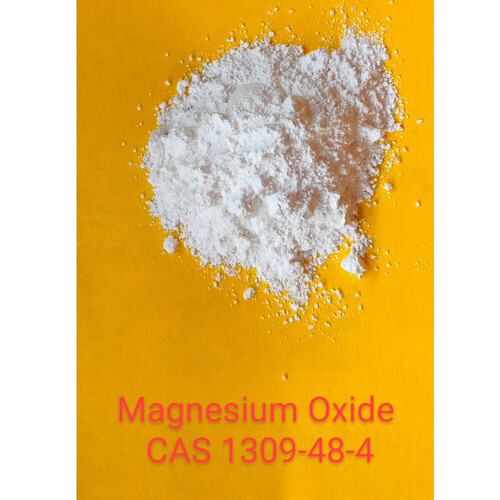
Magnesium oxide (MgO) is a white, hygroscopic solid mineral that occurs naturally as periclase. It is an ionic compound of magnesium and oxygen widely used as an antacid, laxative, dietary supplement, and industrial material due to its high melting point.
Versatile Industrial ApplicationsMagnesium oxide's outstanding thermal stability, high melting point (2852C), and thermal conductivity make it a staple in refractory materials, furnace linings, and insulation. Its adaptability extends to pharmaceuticals for antacids and magnesium supplementation, as well as the food industry-where it serves as an additive (E530) and acidity regulator.
Safe and Stable PerformanceThis industrial-grade MgO is classified under organic acids (notably sulfonic acid types) and demonstrates stability under standard storage. Its low moisture content (<1%) and insolubility in water enhance shelf life and handling, ensuring consistent reliability for a wide range of demanding uses.
Tailored for Custom NeedsParticle size and grade are customizable, allowing adaptation for specific industrial, agricultural, or pharmaceutical processes. MgO is derived from top-quality raw materials such as magnesite and dolomite, guaranteeing high purity and performance in every batch.
FAQ's of magnesium oxide:
Q: How is magnesium oxide typically used in industry and manufacturing?
A: Magnesium oxide finds widespread use as a refractory material in furnace linings, insulation, and crucibles due to its high melting point and thermal conductivity. It is also employed as an additive in the food industry, a supplement or antacid in pharmaceuticals, and in water treatment and fertilizer blends in agriculture.
Q: What are the benefits of using magnesium oxide in water treatment?
A: MgO enhances water treatment processes by neutralizing acidic components and raising pH levels. Its ability to stabilize acidity and its insolubility in water make it an effective and durable option for maintaining optimal water quality in municipal and industrial systems.
Q: When should magnesium oxide be chosen over other magnesium compounds?
A: Magnesium oxide is ideal when high purity, thermal stability, and water insolubility are required. It is preferred over other magnesium compounds for refractory and insulation uses, as well as where sustained pH adjustment is necessary, such as agriculture or water treatment.
Q: Where is magnesium oxide sourced from, and what raw materials are involved?
A: Industrial-grade magnesium oxide is primarily obtained from natural minerals such as magnesite and dolomite. These sources are calcined at high temperatures to produce pure, stable MgO suitable for various applications.
Q: What is the process of customizing particle size in magnesium oxide?
A: The particle size of magnesium oxide can be tailored during production by adjusting grinding and screening methods. Commonly, it is processed to 200 mesh, but finer or coarser sizes can be supplied to meet specific requirements in industries like food processing, pharmaceuticals, or ceramics.
Q: Is magnesium oxide safe for use in food and pharmaceutical applications?
A: Yes, magnesium oxide of appropriate grade and purity (typically 98%-99%) is widely recognized as safe for use as a food additive (E530) and as a magnesium supplement or antacid in pharmaceuticals. Its tasteless, odorless properties and stability support safe integration into consumable products.

 Send Inquiry




 Send Inquiry
 English
 Spanish
 French
 German
 Italian
 Chinese (Simplified)
 Japanese
 Korean
 Arabic
 Portuguese