Phosphoric Acid About
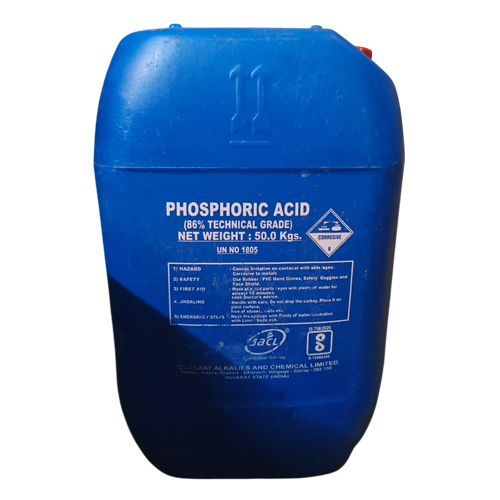
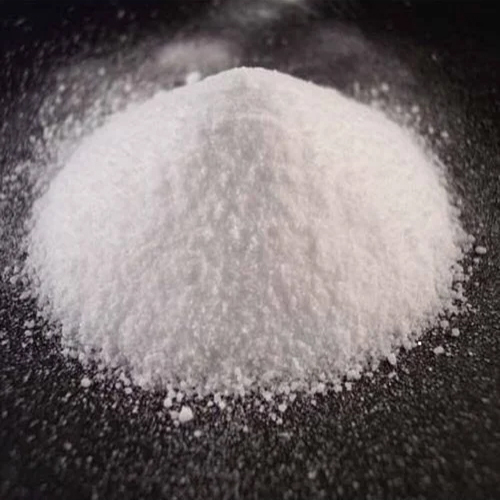
Phosphoric acid (HPO) is a clear, odorless mineral acid. It is most often sold as an 85% syrupy liquid. Pure forms can also form transparent crystals. It is a key ingredient in farm fertilizers, soft drinks, and rust removers.
Versatile Industrial ApplicationsPhosphoric Acid is highly valued in industrial sectors for its efficiency in water treatment, metal surface preparation, and as a component in fertilizers and detergents. Its ability to inhibit rust and participate in chemical reactions makes it indispensable for maintaining equipment longevity and process safety.
Safe Storage and HandlingGiven its Hazard Class 8 classification, Phosphoric Acid should always be stored in a cool, well-ventilated environment within corrosion-resistant containers. It must be kept away from incompatible substances such as metals and bases to avoid hazardous reactions. Proper storage ensures a stable shelf life and minimizes environmental risk.
Chemical Properties and CompatibilityThis acid is a clear, colorless, and completely water-miscible liquid with a sour taste and no smell. Owing to its corrosive nature, it can damage metals and react violently with bases. Handling procedures should include protective equipment and adherence to all safety guidelines to maintain operational safety.
FAQ's of Phosphoric Acid:
Q: How should Phosphoric Acid be stored to ensure safety and product stability?
A: Phosphoric Acid should be stored in tightly sealed plastic drums within a cool, well-ventilated area, away from metals, bases, and other incompatible materials. Storing it under these prescribed conditions preserves its stability and reduces the risk of harmful reactions.
Q: What are the main industrial uses of Phosphoric Acid?
A: This acid serves multiple industrial purposes, including water treatment, the production of fertilizers, rust inhibition on metal surfaces, chemical reagent activities, and formulation of detergents. Lower grades can also be applied in food processing.
Q: When should protective measures be taken while handling Phosphoric Acid?
A: Protective gloves, goggles, and appropriate clothing should always be worn when handling Phosphoric Acid, especially during transfer or mixing, due to its corrosive properties and its tendency to react strongly with metals and bases.
Q: Where can Phosphoric Acid be applied in water treatment and food processing?
A: In water treatment, it controls output pH levels and prevents scaling or corrosion in pipelines. In food processing (using food-grade quality), it acts as an acidulant to regulate taste and acidity in beverages and processed foods.
Q: What benefits does Phosphoric Acid provide in fertilizer production?
A: Phosphoric Acid supplies essential phosphorus, a key nutrient for plant growth. When processed into phosphate fertilizers, it enhances crop yield and promotes healthy development in agricultural settings.
Q: How does Phosphoric Acid interact with metals and bases?
A: Phosphoric Acid is corrosive to most metals and reacts violently with bases, sometimes producing heat or hazardous byproducts. Care should be taken to avoid contact with these materials during storage and handling.

 Send Inquiry




 Send Inquiry
 English
 Spanish
 French
 German
 Italian
 Chinese (Simplified)
 Japanese
 Korean
 Arabic
 Portuguese